2Division of Anesthesiology, Critical Care and Pain Medicine, Department of Critical Care Medicine, The University of Texas MD Anderson Cancer Center, Texas, USA
Abstract
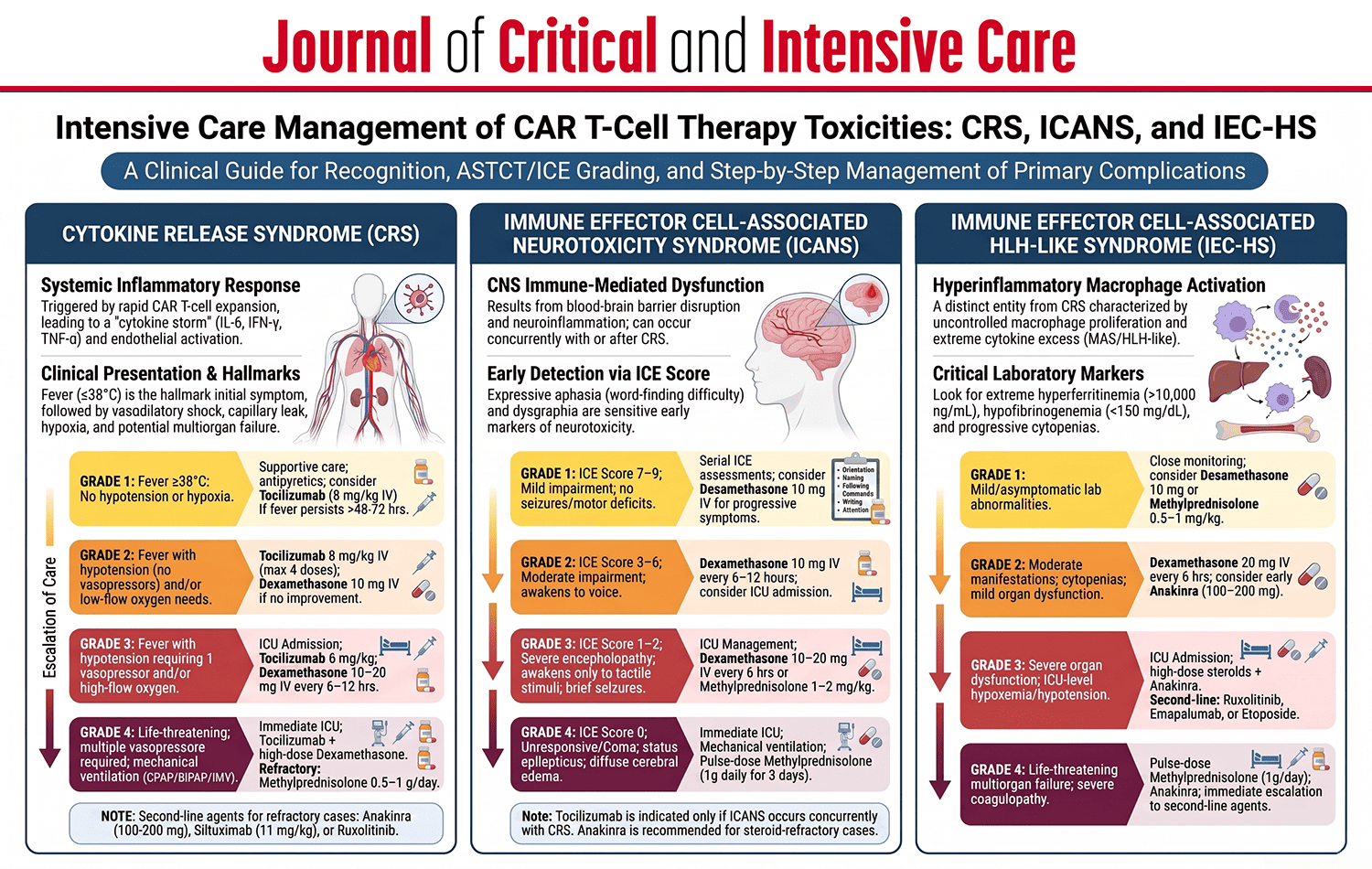
Chimeric antigen receptor (CAR) T-cell therapy has revolutionized the treatment of relapsed or refractory hematologic malignancies, offering durable responses in selected patients while introducing unique immune-mediated toxicities that can rapidly become life-threatening and require intensive care management. This narrative review provides an evidence-based, practical overview of CAR T-cell therapy, focusing on the recognition and management of its major complications in clinical and critical care settings. Current evidence on CAR T-cell biology, clinical indications, toxicity grading, diagnostic evaluation, and intensive care management is synthesized, with particular emphasis on cytokine release syndrome (CRS), immune effector cell-associated neurotoxicity syndrome (ICANS), and immune effector cell-associated hemophagocytic lymphohistiocytosis-like syndrome (IEC-HS). Effective management depends on early recognition, standardized grading, close multidisciplinary collaboration, prompt initiation of immunomodulatory therapy, and timely organ support when indicated. Although the use of CAR T-cell therapy is expanding globally, published clinical experience from Türkiye remains limited, highlighting the need for specialized treatment centers, standardized national protocols, multidisciplinary expertise, and prospective outcome registries. This review provides a practical framework for intensivists caring for patients receiving CAR T-cell therapy, particularly in newly established programs and resource-limited settings, and emphasizes strategies to optimize clinical outcomes through early diagnosis and timely intervention.
Graphical Abstract